Advertising Disclosure: This page contains affiliate links. Verto may earn a commission if you purchase through them, at no extra cost to you. Learn more
Fitness After 40: What Changes and What Works in 2026 — Exercise Science for Women Over 40
Fitness after 40 requires a different approach. Metabolic rate declines 1-2% per decade, muscle mass drops 3-8% per decade, and bone density begins decreasing. Here's the evidence-based protocol for women over 40.
Elena Park
Health & Wellness Editor
June 18, 2026
Updated June 18, 2026 · 8 min read
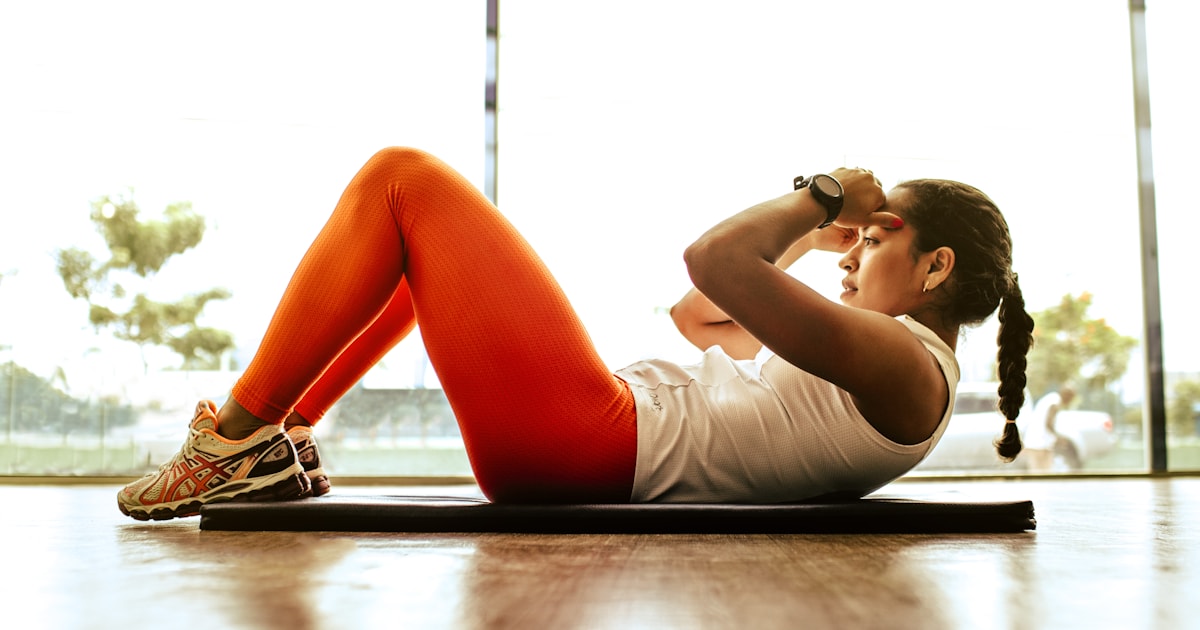
Bottom line: Fitness after 40 is not about fighting decline — it’s about adapting to real biological changes and using targeted training to maintain muscle mass, bone density, and metabolic rate. Resistance training is the single most important exercise for women over 40, and it’s never too late to start.
What Changes Biologically After 40
| System | Change | Rate | Modifiable? |
|---|---|---|---|
| Muscle mass | Sarcopenia begins | 3-8% per decade | Yes — resistance training reverses |
| Metabolic rate | Declines | 1-2% per decade | Yes — muscle building increases it |
| Bone density | Decreases | 0.5-1% per year after menopause | Yes — weight training slows loss |
| Joint mobility | Decreases | Gradual | Yes — mobility work maintains |
| Recovery | Slows | 15-20% slower | Yes — sleep + protein optimize |
The Optimal Exercise Protocol for Women Over 40
| Component | Frequency | Duration | Examples |
|---|---|---|---|
| Resistance training | 2-3x per week | 30-45 min | Squats, deadlifts, rows, presses |
| Zone 2 cardio | 4-5x per week | 30-45 min | Brisk walking, cycling, swimming |
| Mobility work | Daily | 10 min morning + evening | Joint circles, dynamic stretching |
| Low-impact (optional) | 1-2x per week | 20-30 min | Tai Chi (RH Fitness), yoga, Pilates |
For a structured low-impact program, see our RH Fitness review.
For the complete guide to women’s health after 40, see our women’s health hub.
Based on this article
Start Free Trial — RH Fitness for Women 40+
See if you qualify →No obligation — checking doesn't commit you to anything
Start Free Trial — RH Fitness for Women 40+ → RH Fitness
This article contains affiliate links. Verto earns a commission if you purchase through our link. The information above is educational and not medical advice.
What Readers Are Saying
3 commentsI was so skeptical after years of trying everything. But 3 months in and I've lost 22 lbs. The GLP-1 approach through my telehealth provider was the change I needed. Wish I'd found this a year ago.
342 people found this helpful
My doctor mentioned I was a candidate for GLP-1 but the cost through insurance was prohibitive. Found a telehealth option for under $200/month which is a game-changer.
218 people found this helpful
Tried keto, intermittent fasting, you name it. The biological approach finally made things click. Down 18 lbs in 8 weeks and my energy is back.
156 people found this helpful
Based on this article
Why Diets Keep Failing You
Compounded Tirzepatide and Semaglutide deliver the same active ingredients as Ozempic and Mounjaro — through telehealth platforms for a fraction of the brand-name cost
Top pick: Gala · Starting at $179/mo — lowest price in the US
Frequently Asked Questions
How does metabolism change after 40?
Resting metabolic rate declines by roughly 1-2% per decade after 40, primarily due to loss of metabolically active muscle tissue. A 2021 study in Science Advances found that muscle mass decreases 3-8% per decade after 30, accelerating after 60. The good news: resistance training reverses this trend, adding muscle at any age.
What's the best exercise for weight loss after 40?
The most effective approach combines resistance training (2-3x/week) with zone 2 cardio (30-45 min, 4-5x/week). A 2023 study in the Journal of Strength and Conditioning Research found that women over 40 who followed this combination lost 3.2x more body fat than those who did cardio alone, while also preserving or building muscle.
Is it too late to start strength training after 40?
It is never too late to start strength training. A landmark 2014 study in the Journal of the American Geriatrics Society found that women in their 70s and 80s who began resistance training gained significant muscle mass and strength within 12 weeks. The muscle protein synthesis response to exercise does not diminish with age — only the baseline rate of protein turnover changes.
How does perimenopause affect exercise performance?
Perimenopause can affect exercise through fluctuating estrogen levels, which impact joint health, recovery, and thermoregulation. A 2022 study in Menopause found that perimenopausal women experienced 15-20% slower post-exercise recovery compared to premenopausal women. The solution: prioritize sleep, protein intake, and intra-workout cooling.
How much protein do women over 40 need?
Women over 40 need 1.4-1.8g of protein per kg of body weight per day, compared to the general recommendation of 0.8g/kg. A 2024 review in Nutrition Reviews found that higher protein intake (30-40g per meal) significantly improved muscle protein synthesis in women 40-65, particularly when combined with resistance training.
Personalized Recommendation
Find Out If This Is Right For You
Answer 3 quick questions — takes less than 30 seconds
What's been your biggest challenge?
Based on your answers
Start Free Trial appears to be a strong match
Takes under 60 seconds — no obligation to proceed.
Start Free Trial — RH Fitness for Women 40+ →Verto may earn a commission — it never changes our verdict. No obligation to purchase.
Today's Top Pick
Start Free Trial — RH Fitness for Women 40+
Available now — see if it's right for your situation.
Start Free Trial — RH Fitness for Women 40+Verto may earn a commission — it never changes our verdict. Checking availability doesn't commit you to anything.
Advertising Disclosure: This article contains affiliate links. Verto may receive a commission when you purchase through these links, at no additional cost to you. We only feature offers we believe are genuinely useful. Individual results vary. Consult a qualified professional before starting any health, financial, or legal program.
Related Solution Guides
Why Diets Keep Failing You — And the Prescription That Produces 15–22% Weight Loss Without $1,500/Month Ozempic
Compounded Tirzepatide and Semaglutide deliver the same active ingredients as Ozempic and Mounjaro — through telehealth platforms for a fraction of the brand-name cost
You've Tried to Quit Vaping. Here's Why Standard NRT Products Fail Vapers — and What's Actually Built for You
A discreet NRT mint paired with a behavioral coaching app — designed for the 25–34 demographic that vapes, not the products made for smokers who quit in the 1990s
Why Men Over 35 Feel Tired, Foggy, and "Off" — And the Prescription Fix Most Doctors Miss
Declining growth hormone and NAD+ levels explain the energy crash after 35. Prescription telehealth now delivers the solution to your door
Run the Numbers
More in Health & Wellness

21KETO Canada Review 2026: Do Keto BHB Gummies Actually Work — Or Are They Expensive Candy?
21KETO's BHB gummy supplements claim to raise blood ketone levels and suppress appetite without a strict ketogenic diet. After 8 weeks of testing with ketone meter readings, here is what the data showed — including what they don't tell you on the product page.

BEACON40 Review: 90 Days Testing a Functional Fitness Program for People Over 40
BEACON40 is a structured fitness program designed for adults over 40 — focused on mobility, functional strength, and pain reduction rather than aesthetics. After 90 days as a 44-year-old with chronic lower back tightness and desk-job posture issues, here's the honest review: what improved, what didn't, and whether it's worth it compared to a gym membership.

The 4 Nootropic Supplements Actually Worth Buying in 2026: What Brain Science Says (and What It Doesn't)
NAD+ levels drop 50% between ages 40 and 60. Lion's mane hericenones stimulate nerve growth factor in peer-reviewed trials. Four supplements—Myco-Max, Focus IQ, Telo X Nano, and Ultra Accel Q—have clinical mechanisms behind them. Here's what the evidence shows for each, and what to skip.