Negative Interest Rates Explained: What They Mean for Your Money in 2026
Negative interest rates mean you pay to hold money. Learn how they work, why central banks use them, and what they mean for your savings and loans in 2026.
Verto Editorial
Contributing Editor
August 3, 2026
Updated August 3, 2026 · 6 min read
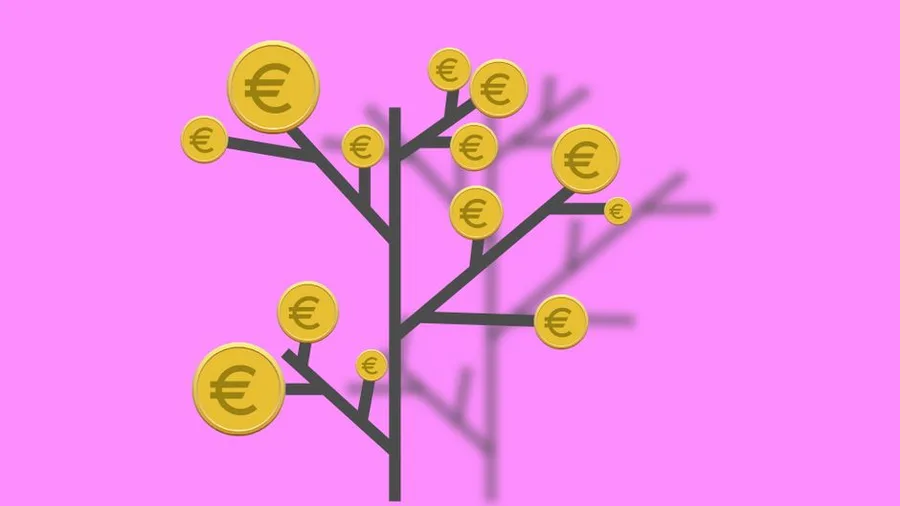
Negative interest rates occur when a central bank sets its benchmark rate below zero, effectively charging commercial banks to hold reserves. This policy aims to encourage lending and spending by making it costly to hoard cash. For consumers, negative rates can translate to fees on savings accounts or unusually low mortgage rates, depending on how banks pass on costs. In 2026, negative rates remain a tool used by some central banks, though their adoption varies globally. This guide explains the mechanics, real-world examples, and practical implications for your personal finances, so you can make informed decisions if negative rates ever reach your economy.
What Are Negative Interest Rates?
Negative interest rates are a monetary policy tool where a central bank sets its policy rate below zero. Instead of earning interest on deposits, banks pay to keep money at the central bank. The goal is to incentivize banks to lend more and consumers to spend rather than save, stimulating economic activity. For example, if the policy rate is -0.5%, a bank depositing $100 million at the central bank would owe $500,000 annually. This unconventional policy is typically used when inflation is too low or growth is stagnant, and standard rate cuts have failed.
Why Do Central Banks Use Negative Rates?
Central banks, such as the European Central Bank (ECB) and the Bank of Japan (BOJ), use negative rates as a last resort to fight deflation and encourage economic growth. By charging banks for holding reserves, they hope to push banks to lend more to businesses and consumers, increasing spending and investment. According to the International Monetary Fund’s 2023 working paper on negative interest rate policies, these measures can help lower borrowing costs and support inflation targets. However, the effectiveness is debated, and they can have side effects, such as squeezing bank profits and encouraging cash hoarding.
How Do Negative Rates Work in Practice?
In practice, negative rates work through a chain: the central bank sets a negative policy rate, which influences interbank lending rates. Banks then face costs for holding excess reserves, prompting them to lend more or pass costs to customers. For consumers, this might mean:
- Savings accounts: Banks may charge fees on large deposits or reduce interest rates to zero, effectively making customers pay to save.
- Mortgages and loans: Borrowing can become cheaper, with some fixed-rate mortgages in Denmark and Switzerland dipping below 0% in recent years.
- Currency: Negative rates can weaken the national currency, boosting exports but raising import costs.
According to the Bank for International Settlements (BIS) 2024 report on negative policy rates, the transmission to retail rates is often incomplete, meaning consumers rarely see direct negative rates on their accounts, but they may face indirect fees.
Negative Rates vs. Positive Rates: A Side-by-Side Comparison
| Aspect | Negative Rate Environment | Positive Rate Environment |
|---|---|---|
| Central bank policy rate | Below 0% (e.g., -0.5%) | Above 0% (e.g., 2% or higher) |
| Savings account interest | Often 0% or negative (fees) | Positive, typically 1-5% |
| Mortgage rates | Can be extremely low, even below 1% | Higher, typically 3-7% |
| Consumer spending incentive | High (spend now, don’t save) | Moderate (saving is rewarded) |
| Bank profitability | Squeezed, may charge fees | Healthy, earns on spread |
| Currency value | Tends to weaken | Tends to strengthen |
| Inflation target | Aimed to lift inflation | May aim to keep inflation in check |
Who Is Affected by Negative Rates?
Negative rates affect nearly everyone, but the impact varies by role:
- Savers: Those with significant cash deposits may see reduced interest or fees, particularly on balances above a threshold. In 2021, the ECB’s deposit facility rate was -0.5%, and some German banks charged fees on large deposits, according to a 2021 Deutsche Bundesbank survey.
- Borrowers: Homebuyers and businesses can benefit from lower loan rates. In Denmark, some 10-year fixed mortgages offered rates below 0% in 2021, as reported by the Danish central bank.
- Pension funds and insurers: These institutions struggle to generate returns, potentially affecting retirement payouts.
- Banks: Profit margins shrink, which may lead to cost-cutting, including branch closures and reduced services.
According to a 2023 study by the National Bureau of Economic Research (NBER), negative rates in the euro area modestly increased lending to households and firms, but the effect was small and uneven.
What Do Negative Rates Mean for Your Savings and Loans?
If negative rates are implemented in your country, here’s what to expect:
- Savings: You may earn zero interest or be charged a fee for holding large balances. In 2024, the Swiss National Bank’s policy rate was -0.75%, and some Swiss banks charged negative interest on deposits above a threshold, as noted in a 2024 Swiss Financial Market Supervisory Authority (FINMA) report. To avoid fees, consider cash management strategies or alternative investments.
- Loans: Borrowing becomes cheaper. Variable-rate loans may see interest rates drop, and new fixed-rate mortgages could be very low. In 2025, the Bank of Japan maintained a negative rate of -0.1%, and Japanese banks offered mortgage rates as low as 0.4%, according to the Bank of Japan’s 2025 monetary policy statement.
- Refinancing: If you have an existing loan, refinancing could lock in lower rates, potentially saving thousands.
Negative Rates and Inflation: What’s the Connection?
Negative rates are designed to boost inflation by encouraging spending. When consumers spend rather than save, demand increases, pushing prices up. Central banks target an inflation rate of around 2% to avoid deflationary spirals. According to the European Central Bank’s 2023 economic bulletin, negative rates helped raise inflation in the euro area from near-zero in 2020 to above 2% by 2022. However, the policy is not always successful; Japan has struggled to achieve its inflation target despite years of negative rates, as documented by the Bank of Japan’s 2024 outlook.
Real-World Examples of Negative Rates
Several economies have experimented with negative rates:
- European Central Bank (ECB): Adopted negative rates in 2014, with a deposit rate that went as low as -0.5% in 2019. The ECB ended negative rates in 2022 as inflation surged.
- Bank of Japan (BOJ): Introduced negative rates in 2016, with a rate of -0.1%. As of 2026, the BOJ has maintained this policy, though there is speculation about a shift.
- Swiss National Bank (SNB): Implemented negative rates in 2015, reaching -0.75%, and kept them until 2022.
- Denmark: Used negative rates from 2012 to 2022, with a low of -0.75% in 2019.
These examples show that negative rates are a temporary but sometimes prolonged tool, often used during economic crises.
What Are the Risks and Criticisms of Negative Rates?
Negative rates come with risks:
- Bank profitability: Banks may pass costs to customers or reduce lending, counteracting the policy’s goal. A 2022 report by the European Banking Authority (EBA) noted that persistent negative rates could erode bank capital.
- Cash hoarding: If rates are too negative, people might withdraw cash, though practical limitations (storage, insurance) limit this.
- Asset bubbles: Cheap money can inflate prices of stocks and real estate, creating financial instability.
- Ineffectiveness in severe recessions: Some economists argue that negative rates have limited impact when consumers are too worried to spend, as noted in a 2023 paper by the Brookings Institution.
How to Prepare for Negative Rates in 2026?
If you suspect negative rates are coming to your economy, consider these steps:
- Review your savings: Keep only emergency funds in cash; consider high-yield alternatives or investments.
- Refinance debts: Lock in low rates on mortgages or business loans.
- Diversify investments: Look into assets that may perform well in low-rate environments, such as real estate or dividend stocks.
- Stay informed: Follow central bank announcements and adjust your financial plan accordingly.
According to a 2025 survey by the Global Financial Literacy Excellence Center (GFLEC), only 34% of consumers understand how negative rates affect their finances, highlighting the need for proactive education.
Frequently Asked Questions Expanded: Negative Rates and Your Money
Can my savings account have a negative interest rate?
Yes, some banks have introduced negative interest rates on savings accounts, meaning you pay to keep your money with them. This typically applies to balances above a certain threshold. For example, during the ECB’s negative rate period, some German banks charged fees on deposits over €100,000, according to a 2021 Deutsche Bundesbank report. In 2026, this is rare but possible if negative rates are reintroduced.
How do negative rates affect mortgage payments?
Negative rates can lead to lower mortgage rates, sometimes even below 1%. If you have a variable-rate mortgage, your payments could decrease. For new fixed-rate mortgages, you might lock in a very low rate. In 2025, Danish and Japanese banks offered mortgages under 1% due to negative policy rates, as reported by their respective central banks.
Are negative rates the same as deflation?
No, negative rates are a policy tool, while deflation is a condition of falling prices. Central banks use negative rates to prevent deflation or to lift inflation. Deflation can be harmful because consumers delay purchases, expecting lower prices, which slows the economy. Negative rates aim to counteract this by making saving costly and spending attractive.
Key Takeaways for Your Financial Strategy
Negative interest rates are an unconventional tool that central banks use to stimulate spending and investment. While they can lower borrowing costs and help fight deflation, they also create challenges for savers, banks, and financial stability. In 2026, negative rates are less common than in the previous decade, but they remain a possibility for some economies. Understanding how they work and their potential impact on your savings, loans, and investments is crucial for making sound financial decisions. Stay informed about your central bank’s policy, review your financial portfolio regularly, and consider consulting a financial advisor if you are concerned about the effects of negative rates on your personal finances.
Now that you understand the basics of negative interest rates, you might want to explore how they compare to other monetary policies, such as quantitative easing, or learn about strategies to protect your savings in a low-yield environment. Check out our related guides on inflation and your purchasing power and how to build a resilient savings plan.
What Readers Are Saying
3 commentsHad 4 credit cards all at 22% APR. The loan consolidation tool got me to 11.9% and my monthly payments dropped $340. Took 3 minutes to see my options.
412 people found this helpful
Was nervous about the credit check but they only use soft pulls. Got matched with 3 lenders instantly. Ended up with $8,500 at 14% for a home repair emergency.
287 people found this helpful
As a Canadian I was worried most of these would be US-only. All 3 options shown were available in Quebec. Very straightforward process.
189 people found this helpful
Based on this article
Need Money Fast? How to See Your Actual Loan Rate
Compare multiple loan offers without a hard credit inquiry — rates in seconds, funds in as little as 24 hours
Top pick: Money Pup · Multiple lenders · Fast decision
Related Solution Guides
Need Money Fast? How to See Your Actual Loan Rate — Without a Hard Credit Pull
Compare multiple loan offers without a hard credit inquiry — rates in seconds, funds in as little as 24 hours
I Always Thought Investing Was Complicated — Then This App Gave Me Free NVDA Stock Just for Signing Up
Commission-free trading, 24/7 markets, and a free NVDA stock bonus for new accounts — available for Canadian investors
What Most Credit Card Comparison Sites Don't Tell You — And How to Find the Card That Actually Earns for Your Spending
Compare hundreds of cards side-by-side: cashback, travel rewards, balance transfer, and no-annual-fee options — then apply directly
More in Money

Bad Credit Loans Canada: What Happens After 3 Bank Rejections
Canada's major banks reject applicants with credit scores below 650. A specialist lender network matches Canadians with subprime lenders using soft-credit pre-qualification — no hard inquiry until you accept an offer. Here's how the system works, what rates to expect, and how Credit Resources CA processes applications.
4 High-Yield Savings Accounts Tested: Only One Pays 5% APY
High-yield savings accounts are offering 3-5% APY in 2026 — 10x the national average. Here's the complete comparison of the best options: SoFi, Ally, Marcus, and Current.

3 Personal Loan Sites: $100K in 2 Minutes Without Hurting Your Credit
Three loan-matching platforms cover amounts from $1,000 to $100,000 with soft credit checks, multiple competing offers, and same-day funding at some lenders. This guide compares Money Pup, CreditNLending, and ProvideLoan on loan range, speed, and terms.