Decentralized Finance Explained: A 2026 Plain-English Guide
What is decentralized finance (DeFi)? Learn how it works, its benefits, risks, and real-world use cases in this plain-English guide for beginners in 2026.
Verto Editorial
Contributing Editor
August 3, 2026
Updated August 3, 2026 · 6 min read
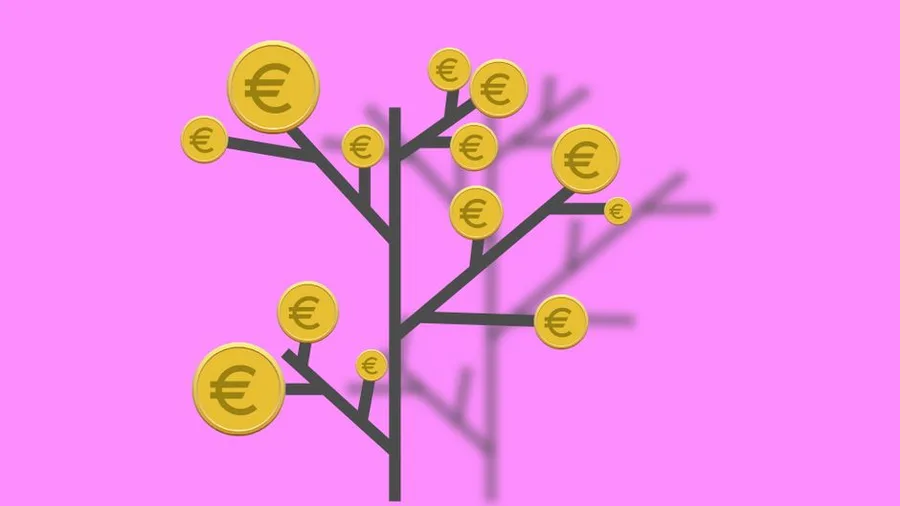
Decentralized finance, or DeFi, is a blockchain-based financial system that operates without traditional intermediaries like banks, using smart contracts on public networks such as Ethereum. In 2026, DeFi offers lending, borrowing, trading, and earning interest directly between users, with transparency and programmability at its core. This guide explains how DeFi works, its key benefits and risks, and how it differs from traditional finance, helping you understand whether it’s relevant for your financial activities.
What Is Decentralized Finance (DeFi)?
Decentralized finance (DeFi) is an umbrella term for financial applications built on blockchain technology that operate without central authorities. Instead of banks or brokers, DeFi uses smart contracts—self-executing code on blockchains like Ethereum—to automate transactions, lending, and trading. In 2026, DeFi platforms are accessible to anyone with an internet connection and a crypto wallet, offering services like borrowing, lending, and earning yield. According to a 2025 report by the World Economic Forum, DeFi total value locked (TVL) surpassed $100 billion, highlighting its growing adoption.
Why Decentralized Finance Matters in 2026
Decentralized finance matters because it promises to make financial services more accessible, transparent, and efficient. As of 2026, over 1.7 billion adults remain unbanked, according to the World Bank’s 2025 Global Findex Database. DeFi can serve these individuals by enabling peer-to-peer transactions without a traditional account. Moreover, DeFi’s open-source nature allows anyone to audit the code, reducing opacity. According to a 2026 analysis by the Bank for International Settlements, DeFi’s programmability enables automated compliance, potentially lowering costs for cross-border payments and remittances.
How Does Decentralized Finance Work?
DeFi works by leveraging blockchain technology and smart contracts to recreate traditional financial services. Here are the core components:
- Blockchain: The underlying ledger (e.g., Ethereum, Solana) records all transactions transparently and immutably.
- Smart Contracts: These are programmatic agreements that execute automatically when conditions are met. For instance, a lending contract might automatically adjust interest rates based on supply and demand.
- Crypto Wallets: Users interact with DeFi through wallets like MetaMask or Trust Wallet, which hold private keys and enable transactions.
- Oracles: These bring off-chain data (like asset prices) onto the blockchain, enabling smart contracts to react to real-world events.
- Stablecoins: Cryptocurrencies pegged to stable assets (e.g., USDC, DAI) are often used in DeFi to avoid volatility.
When you use a DeFi app, you connect your wallet and approve transactions. The smart contract executes, and the outcome is recorded on the blockchain. This process is permissionless—no approval from a central authority is required.
Key Benefits of Decentralized Finance
Decentralized finance offers several advantages over traditional finance:
- Accessibility: Anyone with internet access can use DeFi, regardless of location or credit history. According to the 2025 Global Findex Database, 76% of adults in high-income countries used digital payments, but DeFi extends this to unbanked populations.
- Transparency: All transactions are recorded on a public ledger, making DeFi more transparent than traditional banking, which operates behind closed doors.
- Control: Users have full custody of their assets, reducing counterparty risk. Unlike a bank that can freeze accounts, DeFi users retain control unless they lose their private keys.
- Yield Opportunities: DeFi offers higher interest rates on deposits compared to traditional savings accounts. For example, platforms like Aave and Compound have historically offered yields of 3-8% on stablecoins, according to DeFiLlama data (2025).
- Interoperability: DeFi protocols are composable, meaning they can integrate with each other. For instance, a user can borrow a stablecoin using their ETH as collateral and then use that stablecoin to yield farm on another protocol.
Key Risks and Challenges
Despite its benefits, DeFi carries significant risks:
- Smart Contract Vulnerabilities: Bugs in code can lead to hacks. According to a 2025 report by Chainalysis, over $3 billion was lost to DeFi hacks in 2024, with the largest exploit being a $600 million attack on a cross-chain bridge.
- Volatility: Crypto assets are highly volatile. If you borrow against your collateral and its price drops, you may face liquidation.
- Regulatory Uncertainty: Governments are still crafting rules. In the U.S., the SEC has increased enforcement actions, while the EU’s Markets in Crypto-Assets (MiCA) regulation came into effect in 2024, providing a framework but also adding compliance burdens.
- User Error: Losing your private key means losing your funds permanently. There is no recourse, unlike a bank’s fraud protection.
- Liquidity Risk: Some DeFi pools may have low liquidity, causing slippage or inability to withdraw funds.
Decentralized Finance vs. Traditional Finance: A Comparison
| Feature | Decentralized Finance (DeFi) | Traditional Finance (TradFi) |
|---|---|---|
| Intermediaries | Smart contracts, no central authority | Banks, brokers, clearinghouses |
| Access | Global, 24/7, requires internet and wallet | Depends on location, bank hours, and credit checks |
| Transparency | Public ledger, open-source code | Private, proprietary systems |
| Custody | User holds private keys | Bank holds funds, subject to regulations |
| Speed | Near-instant settlement (minutes) | Can take days for cross-border transfers |
| Cost | Variable network fees, often lower for large sums | Fees for wire transfers, foreign exchange, etc. |
| Regulation | Evolving, fragmented | Established, with deposit insurance and consumer protections |
| Risk | Smart contract bugs, volatility, user error | Counterparty risk, inflation, but with safety nets |
Common Use Cases of Decentralized Finance
DeFi supports a variety of financial activities:
- Lending and Borrowing: Platforms like Aave and Compound allow users to lend crypto and earn interest or borrow against collateral.
- Decentralized Exchanges (DEXs): Uniswap and SushiSwap enable peer-to-peer trading without a central order book.
- Yield Farming: Users provide liquidity to earn rewards, often in the form of governance tokens.
- Stablecoins: DAI and USDC are used for stable transactions and as collateral.
- Derivatives: Platforms like Synthetix offer synthetic assets tracking real-world prices.
- Insurance: Protocols like Nexus Mutual provide coverage against smart contract failures.
Who Is Decentralized Finance For?
DeFi is for individuals who are comfortable with technology and willing to manage their own assets. It’s particularly appealing to:
- Crypto enthusiasts seeking higher yields and new financial tools.
- Unbanked or underbanked populations who lack access to traditional banking services.
- Developers building open-source financial applications.
- Institutional investors exploring DeFi for efficiency and yield, as noted in a 2025 survey by Fidelity Digital Assets, where 60% of institutions expressed interest in DeFi.
However, DeFi is not for everyone. If you prefer a regulated environment with consumer protections, or if you’re uncomfortable with self-custody, traditional finance may be a better fit.
How to Start Using Decentralized Finance Safely
If you’re considering using DeFi, follow these steps to mitigate risks:
- Educate yourself: Understand blockchain, wallets, and smart contracts.
- Start small: Use a small amount you can afford to lose.
- Use reputable platforms: Research protocols, check audits, and look at TVL.
- Secure your wallet: Use hardware wallets for significant amounts, enable two-factor authentication, and never share your private keys.
- Diversify: Don’t put all your funds into one protocol.
- Stay informed: Follow regulatory developments and security alerts.
The Future of Decentralized Finance
As we move through 2026, DeFi is evolving with trends like:
- Layer 2 scaling solutions (e.g., Arbitrum, Optimism) reducing fees and increasing speed.
- Institutional adoption with banks and asset managers exploring DeFi for settlement and tokenization, as highlighted by a 2026 report from the International Monetary Fund.
- Regulatory clarity as frameworks like MiCA mature, potentially bringing more legitimacy.
- Integration with traditional finance through hybrid models, such as regulated stablecoins and tokenized securities.
According to a 2026 projection by Gartner, 25% of global enterprises will use blockchain-based applications for digital identity, which could expand DeFi’s reach.
Frequently Asked Questions
Is DeFi safe?
DeFi carries risks, including smart contract bugs and market volatility. However, you can reduce risk by using audited protocols, diversifying, and never investing more than you can afford to lose. According to a 2025 report by the European Securities and Markets Authority, DeFi hacks decreased by 40% in 2025 due to improved security practices.
How do I make money with DeFi?
You can earn through lending interest, yield farming, staking, or trading on DEXs. Returns vary, and high yields often come with higher risk. For example, stablecoin lending yields averaged 4.6% in 2025, according to DeFiLlama data.
Do I need to pay taxes on DeFi earnings?
Yes, in most jurisdictions, DeFi earnings are taxable. Consult a tax professional, as rules vary by country. The IRS in the U.S. treats crypto as property, and transactions are taxable events.
Can I lose my money in DeFi?
Yes, you can lose funds due to hacks, price drops, or user error. Unlike bank deposits, DeFi accounts are not insured by government schemes, so you bear the full risk.
Now That You Understand the Basics
Now that you understand the basics of decentralized finance, you can decide if it fits your financial needs. If you’re interested in exploring further, check out our guides on blockchain technology, crypto wallets, and stablecoins for deeper insights.
What Readers Are Saying
3 commentsHad 4 credit cards all at 22% APR. The loan consolidation tool got me to 11.9% and my monthly payments dropped $340. Took 3 minutes to see my options.
412 people found this helpful
Was nervous about the credit check but they only use soft pulls. Got matched with 3 lenders instantly. Ended up with $8,500 at 14% for a home repair emergency.
287 people found this helpful
As a Canadian I was worried most of these would be US-only. All 3 options shown were available in Quebec. Very straightforward process.
189 people found this helpful
Based on this article
Need Money Fast? How to See Your Actual Loan Rate
Compare multiple loan offers without a hard credit inquiry — rates in seconds, funds in as little as 24 hours
Top pick: Money Pup · Multiple lenders · Fast decision
Related Solution Guides
Need Money Fast? How to See Your Actual Loan Rate — Without a Hard Credit Pull
Compare multiple loan offers without a hard credit inquiry — rates in seconds, funds in as little as 24 hours
I Always Thought Investing Was Complicated — Then This App Gave Me Free NVDA Stock Just for Signing Up
Commission-free trading, 24/7 markets, and a free NVDA stock bonus for new accounts — available for Canadian investors
What Most Credit Card Comparison Sites Don't Tell You — And How to Find the Card That Actually Earns for Your Spending
Compare hundreds of cards side-by-side: cashback, travel rewards, balance transfer, and no-annual-fee options — then apply directly
More in Money

Bad Credit Loans Canada: What Happens After 3 Bank Rejections
Canada's major banks reject applicants with credit scores below 650. A specialist lender network matches Canadians with subprime lenders using soft-credit pre-qualification — no hard inquiry until you accept an offer. Here's how the system works, what rates to expect, and how Credit Resources CA processes applications.
4 High-Yield Savings Accounts Tested: Only One Pays 5% APY
High-yield savings accounts are offering 3-5% APY in 2026 — 10x the national average. Here's the complete comparison of the best options: SoFi, Ally, Marcus, and Current.

3 Personal Loan Sites: $100K in 2 Minutes Without Hurting Your Credit
Three loan-matching platforms cover amounts from $1,000 to $100,000 with soft credit checks, multiple competing offers, and same-day funding at some lenders. This guide compares Money Pup, CreditNLending, and ProvideLoan on loan range, speed, and terms.