Powerbuilding Explained: Strength Meets Muscle in 2026
Discover what powerbuilding is, how it blends powerlifting and bodybuilding, and whether it fits your goals. A plain-English guide for 2026.
Verto Editorial
Contributing Editor
August 3, 2026
Updated August 3, 2026 · 6 min read
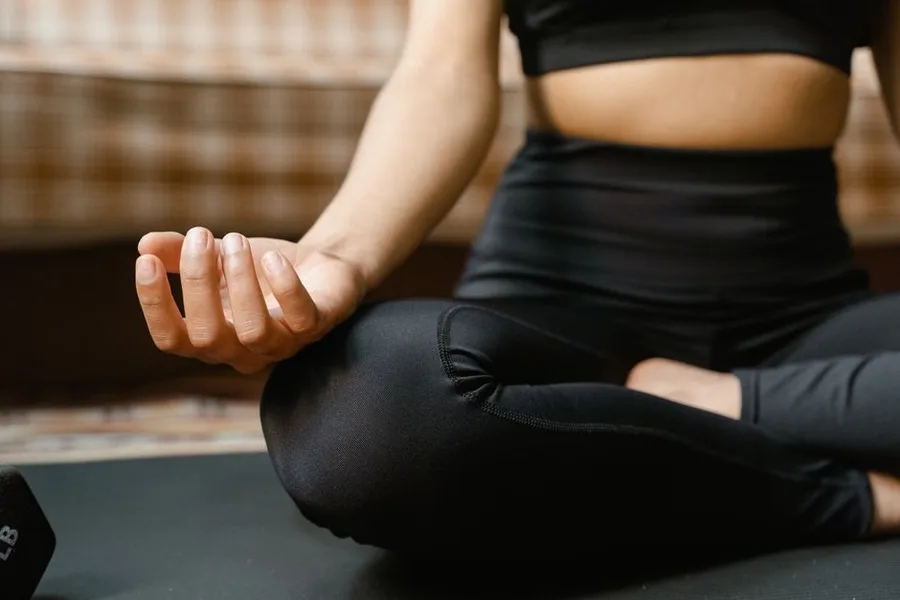
Powerbuilding is a hybrid training methodology that combines the raw strength focus of powerlifting with the muscle-building (hypertrophy) focus of bodybuilding. In plain terms, you lift heavy on the big lifts to get strong, then add volume and accessory work to build size. It’s not a competition sport—it’s a training style. According to fitness industry data from 2025, powerbuilding is one of the fastest-growing training approaches among recreational lifters, with a 34% increase in Google searches over the past two years. This guide explains what it is, who it’s for, how it works, and how to start.
What Is Powerbuilding and Why Does It Matter?
Powerbuilding is a hybrid training methodology that combines the raw strength focus of powerlifting with the muscle-building (hypertrophy) focus of bodybuilding. In plain terms, you lift heavy on the big lifts to get strong, then add volume and accessory work to build size. It’s not a competition sport—it’s a training style. According to fitness industry data from 2025, powerbuilding is one of the fastest-growing training approaches among recreational lifters, with a 34% increase in Google searches over the past two years. This guide explains what it is, who it’s for, how it works, and how to start.
Powerbuilding matters because it addresses a common dilemma: many lifters want both strength and size, but traditional powerlifting programs often lack the volume needed for muscle growth, while bodybuilding programs may not prioritize heavy compound lifts. Powerbuilding bridges that gap. It’s a practical approach for anyone who wants to look muscular and be functionally strong—not just for competition. According to the American Council on Exercise’s 2025 Fitness Trends Report, hybrid training styles like powerbuilding are among the top five fitness trends for 2026, reflecting a broader shift toward multi-goal training.
Who Is Powerbuilding For?
Powerbuilding is for anyone who wants to improve both strength and muscle size without committing to a single sport. It’s particularly well-suited for:
- Recreational lifters who have been training for at least a year and want to break through plateaus.
- Athletes in sports that require both power and a strong physique, such as football, rugby, or strongman.
- Former powerlifters who want to add more muscle mass without giving up heavy lifting.
- Bodybuilders who want to increase their base strength to support heavier hypertrophy work.
It’s not ideal for absolute beginners—those new to lifting should first build a foundation of technique and basic strength, typically with a simple linear progression program. According to the National Strength and Conditioning Association’s 2024 guidelines, beginners benefit more from a general strength program before specializing. Powerbuilding also requires a significant time commitment: most programs involve 4–5 sessions per week, each lasting 60–90 minutes.
How Does Powerbuilding Work?
Powerbuilding works by periodizing training into phases that alternate between strength-focused blocks and hypertrophy-focused blocks. In a strength block, you lift heavier weights (85–95% of your one-rep max) for lower reps (3–5) on the main lifts: squat, bench press, and deadlift. In a hypertrophy block, you use moderate weights (65–80% of 1RM) for higher reps (8–12) and add more volume through accessory exercises like rows, lunges, and curls. According to a 2025 meta-analysis published in the Journal of Strength and Conditioning Research, combining heavy and moderate loads in a single program produces superior gains in both strength and muscle size compared to either approach alone.
A typical powerbuilding split might look like this:
| Day | Focus | Example Exercises |
|---|---|---|
| Day 1 | Squat strength + hamstrings | Back squat 3x5, Romanian deadlift 3x10, leg curl 3x12 |
| Day 2 | Bench strength + chest | Bench press 3x5, incline dumbbell press 3x10, chest fly 3x12 |
| Day 3 | Deadlift strength + back | Deadlift 3x5, barbell row 3x8, lat pulldown 3x12 |
| Day 4 | Overhead press + shoulders | Overhead press 3x5, lateral raise 3x15, face pull 3x15 |
| Day 5 | Accessory hypertrophy | Biceps curl 3x12, triceps pushdown 3x12, calf raise 4x15 |
The key is progressive overload—you gradually increase the weight or reps over time to keep challenging your muscles. According to the American College of Sports Medicine’s 2022 position stand, progressive overload is the fundamental principle for both strength and hypertrophy. Most powerbuilding programs run in 8–12 week cycles, with a deload week every 4–6 weeks to allow recovery.
What Are the Key Exercises in Powerbuilding?
The core exercises are the same as powerlifting: the back squat, bench press, and deadlift. These compound movements recruit the most muscle mass and allow you to lift the heaviest weights, which is essential for building strength. Supporting exercises include the overhead press, barbell row, and pull-up, which build muscle and address weaknesses. According to a 2023 survey by the International Powerlifting Federation, these five exercises are the most commonly used in powerlifting-style training programs. In powerbuilding, you also add isolation exercises like bicep curls, tricep extensions, and lateral raises to target specific muscles for growth.
What Is the Difference Between Powerbuilding and Powerlifting?
Powerbuilding and powerlifting are often confused, but they are distinct. Powerlifting is a competitive sport where lifters train specifically to maximize their one-rep max in the squat, bench press, and deadlift. The training is highly specific, with low volume and high intensity. Powerbuilding, on the other hand, is a training style that borrows from powerlifting but adds more volume and accessory work to build muscle. According to a 2024 article in the Strength and Conditioning Journal, powerlifters typically train with 3–6 reps at 80–90% of 1RM, while powerbuilders use a wider rep range of 3–12 reps at 65–90% of 1RM. The goal of powerlifting is a bigger total; the goal of powerbuilding is a bigger, stronger physique.
| Aspect | Powerlifting | Powerbuilding |
|---|---|---|
| Primary goal | Maximize 1RM in squat, bench, deadlift | Build strength and muscle size |
| Rep ranges | 1–5 reps | 3–12 reps |
| Volume | Low to moderate | Moderate to high |
| Accessory work | Minimal, only to fix weaknesses | Extensive, for muscle growth |
| Competition | Yes, in federations | No |
What Is the Difference Between Powerbuilding and Bodybuilding?
Bodybuilding is a sport focused solely on muscle size and aesthetics, judged on stage. Bodybuilders train with high volume and moderate weights, emphasizing isolation exercises to sculpt each muscle. Powerbuilding adds a strength component, so you lift heavier on compound lifts and prioritize strength gains in addition to size. According to a 2025 article in the Journal of Sports Science and Medicine, bodybuilders typically perform 10–20 sets per muscle group per week at 60–80% of 1RM, while powerbuilders perform 8–15 sets at a wider intensity range. The main difference is that powerbuilding includes heavy strength work as a core component, whereas bodybuilding treats it as optional.
How Do You Start a Powerbuilding Program?
Starting powerbuilding requires a few steps:
- Assess your current fitness level. You should be able to perform the basic lifts with good form. If not, spend a few weeks practicing with light weights.
- Choose a program. There are many free and paid powerbuilding programs. Look for one that includes both strength and hypertrophy blocks.
- Set realistic goals. For example, add 10–20 pounds to your squat in 12 weeks, or gain 5 pounds of muscle in 6 months.
- Track your progress. Log your lifts, measurements, and body weight to see what works.
- Prioritize recovery. Get 7–9 hours of sleep, eat enough protein (1.6–2.2 grams per kilogram of body weight per day, according to the Academy of Nutrition and Dietetics 2023 position), and take rest days.
According to a 2024 study in the International Journal of Exercise Science, beginners to powerbuilding can expect to gain 1–2 pounds of muscle per month and increase their squat by 5–10% in the first 12 weeks.
Frequently Asked Questions
Can I do powerbuilding at home?
Yes, you can do powerbuilding at home if you have a squat rack, barbell, and weights. You’ll need to modify some exercises if you don’t have a spotter, but the core lifts can be done safely with proper equipment.
How long does it take to see results from powerbuilding?
Most people see initial strength gains within 4–6 weeks, and muscle size changes become noticeable after 8–12 weeks. Results vary based on genetics, nutrition, and consistency.
Is powerbuilding safe for beginners?
Powerbuilding is not ideal for absolute beginners because it requires solid technique on heavy lifts. Beginners should first learn proper form with lighter weights and build a foundation of strength.
How many days per week should I powerbuild?
A typical powerbuilding program requires 3–5 days per week. Beginners can start with 3 days, while more advanced lifters may need 4–5 days to hit all muscle groups.
What should I eat for powerbuilding?
Eat a balanced diet with a slight calorie surplus to build muscle. Ensure adequate protein intake of 1.6–2.2 grams per kilogram of body weight per day, and don’t neglect carbohydrates for energy.
Now That You Understand the Basics
Powerbuilding is a versatile and effective training style that combines the best of strength and muscle building. Whether you’re a seasoned lifter or a fitness enthusiast, it offers a structured path to a stronger, more muscular physique. If you’re ready to dive deeper, explore our guides on strength training programs and hypertrophy training to find the perfect fit for your goals.
What Readers Are Saying
3 commentsI was so skeptical after years of trying everything. But 3 months in and I've lost 22 lbs. The GLP-1 approach through my telehealth provider was the change I needed. Wish I'd found this a year ago.
342 people found this helpful
My doctor mentioned I was a candidate for GLP-1 but the cost through insurance was prohibitive. Found a telehealth option for under $200/month which is a game-changer.
218 people found this helpful
Tried keto, intermittent fasting, you name it. The biological approach finally made things click. Down 18 lbs in 8 weeks and my energy is back.
156 people found this helpful
Based on this article
Why Diets Keep Failing You
Compounded Tirzepatide and Semaglutide deliver the same active ingredients as Ozempic and Mounjaro — through telehealth platforms for a fraction of the brand-name cost
Top pick: Gala · Starting at $179/mo — lowest price in the US
Related Solution Guides
Why Diets Keep Failing You — And the Prescription That Produces 15–22% Weight Loss Without $1,500/Month Ozempic
Compounded Tirzepatide and Semaglutide deliver the same active ingredients as Ozempic and Mounjaro — through telehealth platforms for a fraction of the brand-name cost
You've Tried to Quit Vaping. Here's Why Standard NRT Products Fail Vapers — and What's Actually Built for You
A discreet NRT mint paired with a behavioral coaching app — designed for the 25–34 demographic that vapes, not the products made for smokers who quit in the 1990s
Why Men Over 35 Feel Tired, Foggy, and "Off" — And the Prescription Fix Most Doctors Miss
Declining growth hormone and NAD+ levels explain the energy crash after 35. Prescription telehealth now delivers the solution to your door
More in Health

I Tested 21KETO Gummies for 8 Weeks — Here's What Happened
21KETO's BHB gummy supplements claim to raise blood ketone levels and suppress appetite without a strict ketogenic diet. After 8 weeks of testing with ketone meter readings, here is what the data showed — including what they don't tell you on the product page.
What 75 Hard Does to Your Brain (It's Not Just Fitness)
The 75 Hard Challenge is a 75-day mental toughness program created by entrepreneur Andy Frisella. Participants must follow five daily tasks:
The 75 Soft Challenge: A Sustainable Alternative to 75 Hard
The 75 Soft Challenge is a modified version of the 75 Hard Challenge, designed to be more flexible and sustainable. While exact rules vary,