Hair Transplantation Explained: Your Plain-English Guide for 2026
Understand hair transplantation in plain English: how it works, who it's for, what to expect, and key factors to consider before deciding in 2026.
Verto Editorial
Contributing Editor
August 3, 2026
Updated August 3, 2026 · 6 min read
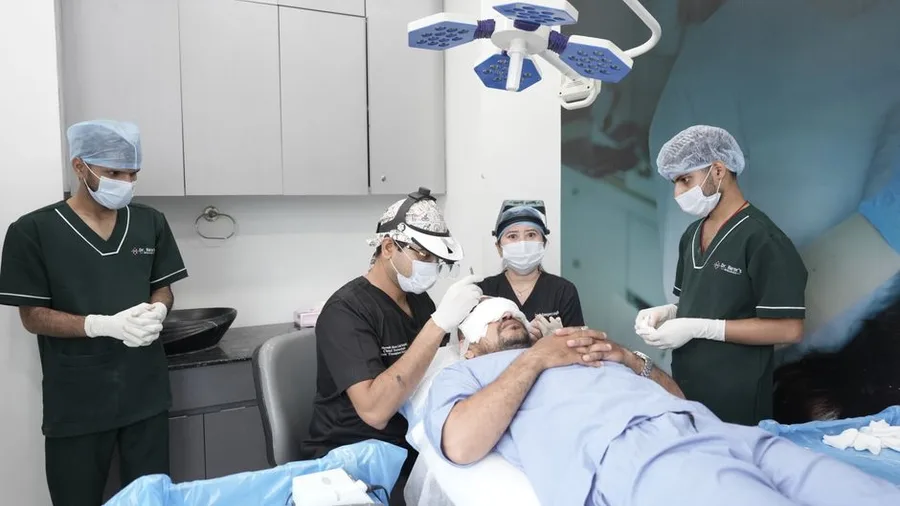
Hair transplantation is a surgical procedure that moves hair follicles from one part of the scalp (the donor area) to a balding or thinning area (the recipient area). It is a permanent solution for androgenetic alopecia, commonly known as male or female pattern baldness. The procedure has evolved significantly, with modern techniques like FUE and FUT offering natural-looking results. This guide explains what hair transplantation is, how it works, who it’s for, and what to consider before deciding. By the end, you’ll understand the basics to have informed conversations with a specialist.
What is hair transplantation and how does it work?
Hair transplantation is a surgical technique that redistributes your own hair follicles from a donor-dominant area (typically the back and sides of the scalp) to areas of thinning or baldness. The procedure is based on the principle of donor dominance: follicles taken from these areas are genetically resistant to the hormone dihydrotestosterone (DHT), which causes pattern hair loss, so they continue to grow after transplantation. The two primary methods are Follicular Unit Transplantation (FUT) and Follicular Unit Extraction (FUE). In FUT, a strip of scalp is removed and dissected into individual follicular units. In FUE, individual follicles are extracted directly using a punch tool. Both methods are performed under local anesthesia and are outpatient procedures.
Why does hair transplantation matter in 2026?
Hair loss affects millions of people worldwide, and its psychological impact is significant. According to the American Hair Loss Association, by age 35, two-thirds of American men will experience some degree of hair loss, and by age 50, approximately 85% of men will have significantly thinning hair. For women, the American Academy of Dermatology reports that about 40% of women over age 40 experience noticeable hair loss. Hair transplantation offers a permanent, natural-looking solution for many, restoring confidence and self-esteem. In 2026, technological advances have made procedures more accessible, with reduced recovery times and improved outcomes, making it a relevant option for many individuals.
Who is a good candidate for hair transplantation?
Ideal candidates for hair transplantation are individuals with androgenetic alopecia who have sufficient donor hair to achieve their desired density. The best candidates are those with stable hair loss, meaning their hair loss has stabilized with medication or age. According to the International Society of Hair Restoration Surgery (ISHRS), candidates should be in good general health, have realistic expectations, and understand the limitations of the procedure. People with medical conditions that affect healing, such as uncontrolled diabetes, or those with certain scalp conditions may not be suitable candidates. Additionally, individuals with diffuse thinning or those who have experienced hair loss due to medical treatments like chemotherapy may not benefit from transplantation.
What are the main types of hair transplant procedures?
The two main types of hair transplant procedures are FUT (Follicular Unit Transplantation) and FUE (Follicular Unit Extraction). FUT, also known as strip surgery, involves removing a strip of skin from the donor area, which is then dissected into follicular units under a microscope. FUE involves extracting individual follicular units directly from the donor area using a micro-punch tool. The table below compares the key differences:
| Feature | FUT | FUE |
|---|---|---|
| Procedure | Strip removal | Individual extraction |
| Scarring | Linear scar | Tiny dot scars |
| Recovery time | 1-2 weeks | 3-5 days |
| Hair length | Can be shaved | Must be shaved |
| Cost | Generally less expensive | Generally more expensive |
| Best for | Patients who want maximum graft yield | Patients who prefer short hair styles |
Both procedures are effective, and the choice depends on the patient’s goals, hair characteristics, and surgeon’s recommendation.
What should you expect during a hair transplant procedure?
A hair transplant procedure typically takes 4-8 hours, depending on the number of grafts. The process begins with a consultation where the surgeon assesses your hair loss, discusses goals, and plans the transplant. On the day of the procedure, the donor area is trimmed and local anesthesia is applied. For FUT, a strip is removed and the wound is closed with stitches. For FUE, individual follicles are extracted. The recipient area is then prepared, and the surgeon makes tiny incisions to place the grafts. After the procedure, you may experience some swelling, redness, and scabbing, which usually subsides within a week. Most patients can return to work within a few days, but strenuous activity should be avoided for a few weeks.
What are the costs and recovery considerations?
Hair transplant costs vary widely based on geographic location, surgeon expertise, and the number of grafts. According to the ISHRS, the average cost of a hair transplant in the United States ranges from $4,000 to $15,000. It’s important to note that most insurance plans do not cover hair transplantation as it is considered a cosmetic procedure. Recovery involves some downtime, with most patients experiencing redness and scabbing for a week. The transplanted hair will shed within 2-3 weeks, which is normal, and new growth typically begins at 3-4 months, with full results visible at 12-18 months.
What are the risks and limitations of hair transplantation?
Like any surgical procedure, hair transplantation carries risks, including infection, bleeding, scarring, and unnatural-looking results if not performed by a skilled surgeon. According to the American Society of Plastic Surgeons, the overall complication rate is low, but it’s essential to choose a board-certified surgeon with experience in hair restoration. Limitations include the fact that transplantation does not prevent future hair loss in non-transplanted areas, so ongoing medical therapy may be needed. Additionally, the procedure cannot create new hair; it redistributes existing hair, so there must be enough donor hair to achieve the desired coverage.
How do you choose a hair transplant surgeon?
Choosing a qualified surgeon is crucial for a successful outcome. Look for a surgeon who is board-certified in dermatology or plastic surgery and has specialized training in hair restoration. According to the ISHRS, you should verify the surgeon’s credentials, ask to see before-and-after photos of previous patients, and seek testimonials. It’s also wise to have consultations with multiple surgeons to compare their recommendations and comfort levels. The American Board of Hair Restoration Surgery (ABHRS) offers certification specifically for hair restoration surgeons, which can be a valuable credential.
What are the alternatives to hair transplantation?
For those who are not candidates for surgery or prefer non-invasive options, there are alternatives. Medications such as minoxidil (Rogaine) and finasteride (Propecia) are approved by the U.S. Food and Drug Administration (FDA) for treating hair loss. Low-level laser therapy (LLLT) is another option, with devices like the HairMax LaserComb showing efficacy in clinical trials. Platelet-rich plasma (PRP) therapy involves injecting concentrated platelets from your own blood into the scalp to stimulate hair growth. These options can be used alone or in combination with transplantation to enhance results.
What are the future trends in hair transplantation?
Advancements in technology are shaping the future of hair transplantation. Robotic-assisted FUE systems, such as the ARTAS system, are increasing precision and reducing procedure time. Research into hair cloning and stem cell therapy is ongoing, with the potential to provide unlimited donor hair in the future. According to a 2025 report by Grand View Research, the global hair transplant market is expected to grow significantly, driven by technological innovations and increasing awareness. These trends suggest that hair transplantation will become even more effective and accessible in the coming years.
Now that you understand the basics
You now have a solid understanding of what hair transplantation is, how it works, and what to consider. If you’re exploring this option, the next steps are to research qualified surgeons, schedule consultations, and discuss your goals and expectations. For more detailed information on related topics, you can explore our guides on hair loss treatments and surgical options.
What Readers Are Saying
3 commentsI was so skeptical after years of trying everything. But 3 months in and I've lost 22 lbs. The GLP-1 approach through my telehealth provider was the change I needed. Wish I'd found this a year ago.
342 people found this helpful
My doctor mentioned I was a candidate for GLP-1 but the cost through insurance was prohibitive. Found a telehealth option for under $200/month which is a game-changer.
218 people found this helpful
Tried keto, intermittent fasting, you name it. The biological approach finally made things click. Down 18 lbs in 8 weeks and my energy is back.
156 people found this helpful
Based on this article
Why Diets Keep Failing You
Compounded Tirzepatide and Semaglutide deliver the same active ingredients as Ozempic and Mounjaro — through telehealth platforms for a fraction of the brand-name cost
Top pick: Gala · Starting at $179/mo — lowest price in the US
Related Solution Guides
Why Diets Keep Failing You — And the Prescription That Produces 15–22% Weight Loss Without $1,500/Month Ozempic
Compounded Tirzepatide and Semaglutide deliver the same active ingredients as Ozempic and Mounjaro — through telehealth platforms for a fraction of the brand-name cost
You've Tried to Quit Vaping. Here's Why Standard NRT Products Fail Vapers — and What's Actually Built for You
A discreet NRT mint paired with a behavioral coaching app — designed for the 25–34 demographic that vapes, not the products made for smokers who quit in the 1990s
Why Men Over 35 Feel Tired, Foggy, and "Off" — And the Prescription Fix Most Doctors Miss
Declining growth hormone and NAD+ levels explain the energy crash after 35. Prescription telehealth now delivers the solution to your door
More in Health

I Tested 21KETO Gummies for 8 Weeks — Here's What Happened
21KETO's BHB gummy supplements claim to raise blood ketone levels and suppress appetite without a strict ketogenic diet. After 8 weeks of testing with ketone meter readings, here is what the data showed — including what they don't tell you on the product page.

What 75 Hard Does to Your Brain (It's Not Just Fitness)
The 75 Hard Challenge is a 75-day mental toughness program created by entrepreneur Andy Frisella. Participants must follow five daily tasks:

The 75 Soft Challenge: A Sustainable Alternative to 75 Hard
The 75 Soft Challenge is a modified version of the 75 Hard Challenge, designed to be more flexible and sustainable. While exact rules vary,