Blue Light Glasses Explained: Do They Really Work in 2026?
Blue light glasses filter high-energy light from screens. Learn how they work, who benefits, and what science says about eye strain and sleep in 2026.
Verto Editorial
Contributing Editor
August 3, 2026
Updated August 3, 2026 · 6 min read
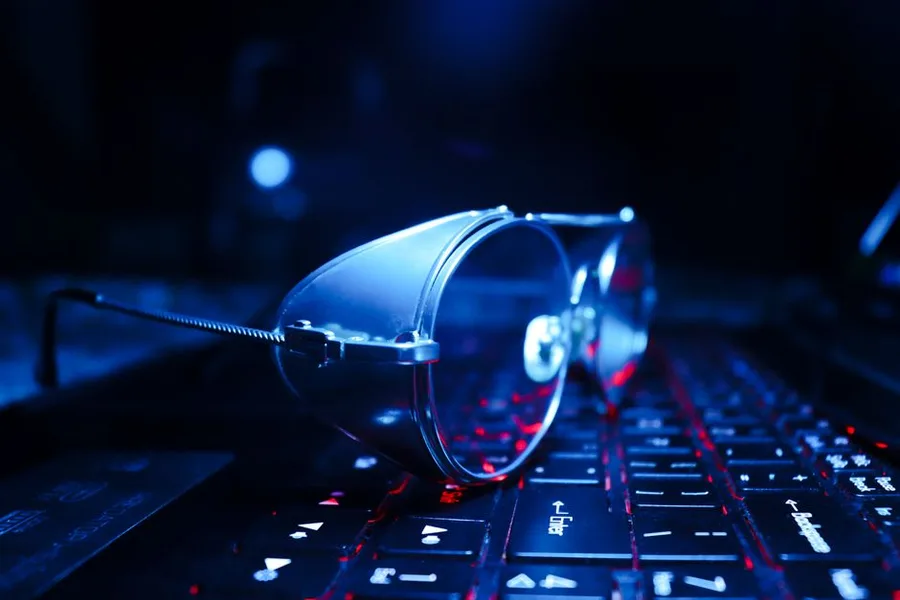
Blue light glasses are eyewear with lenses that filter a portion of high-energy visible (HEV) blue light emitted by digital screens, LED lighting, and the sun. They are designed to reduce potential eye strain and minimize disruption to your sleep-wake cycle, especially when used in the evening. In 2026, they remain a popular, low-cost tool for people who spend hours daily in front of computers, phones, or tablets. This plain-English guide explains what blue light is, how these glasses work, what the science says, and who might benefit most.
What Is Blue Light and Why Does It Matter?
Blue light is a color in the visible light spectrum that has a short wavelength and high energy. It is emitted by the sun, as well as by digital screens, fluorescent and LED lighting, and many modern devices. According to the American Academy of Ophthalmology (AAO), blue light from screens is not known to cause permanent eye damage, but it can contribute to digital eye strain and may affect your circadian rhythm, especially when you are exposed to it at night.
The human eye is not very good at blocking blue light. The cornea and lens can filter some, but a significant amount reaches the retina. This is why blue light has been a topic of interest among researchers and eye care professionals. In 2026, the conversation has shifted from fear-based claims to a more balanced understanding: blue light is not inherently harmful, but managing exposure—especially in the hours before bed—can be beneficial for sleep and comfort.
According to a 2023 report from The Vision Council, about 60% of American adults experience symptoms of digital eye strain, such as dry eyes, headaches, and blurred vision. While blue light glasses are often marketed as a solution for these symptoms, the same report notes that many factors—including screen brightness, viewing distance, and blink rate—play a role. Understanding what blue light is and what it does prepares you to evaluate whether these glasses are right for you.
How Do Blue Light Glasses Work?
Blue light glasses have lenses that are treated with a special coating or are made with a material that absorbs a portion of blue light wavelengths, typically in the 380–500 nanometer range. This reduces the amount of blue light that reaches your eyes. The most common types are clear lenses with a slight yellow tint, which are designed for daytime use, and amber or orange-tinted lenses, which block a higher percentage of blue light and are often recommended for evening wear.
The effectiveness of blue light glasses depends on the percentage of blue light they block. A 2024 review in the journal Optometry and Vision Science found that lenses with a 20–40% blue light blocking rate are typical for clear lenses, while amber lenses can block up to 90% or more. However, the same review noted that the clinical significance of these percentages for eye strain or sleep is still under investigation, and that more research is needed to establish definitive guidelines.
It is also important to understand that blue light glasses do not block all blue light—only a portion. They are not a substitute for good screen habits, such as taking regular breaks, adjusting screen brightness, or using the 20-20-20 rule (every 20 minutes, look at something 20 feet away for 20 seconds).
What Does the Science Say About Blue Light Glasses?
The scientific evidence on blue light glasses is mixed but not negative. A 2023 meta-analysis published in the Journal of Ophthalmology pooled data from 12 randomized controlled trials and found that blue light glasses did not significantly reduce eye strain symptoms compared to placebo lenses in the short term. However, the same analysis noted that some participants reported subjective improvements, and that longer-term studies are needed.
When it comes to sleep, the evidence is slightly more supportive. A 2022 study from the University of Houston College of Optometry found that wearing amber-tinted glasses in the three hours before bed increased melatonin levels by about 58% compared to clear glasses. Melatonin is the hormone that regulates sleep, and its increase suggests that blocking blue light in the evening can help signal to your body that it is time to wind down.
According to the American Academy of Sleep Medicine’s 2025 clinical practice guideline, minimizing exposure to bright light in the hour before bedtime is recommended for better sleep, and blue light filtering glasses can be a helpful aid for people who must use screens at night. However, the guideline also emphasizes that the most effective approach is to reduce screen time altogether or use device features that reduce blue light emission.
Who Should Consider Blue Light Glasses?
Blue light glasses are not necessary for everyone, but they may be helpful for specific groups:
- People who work long hours on computers — If you spend more than 6 hours a day in front of a screen, you may experience digital eye strain. Blue light glasses may help reduce discomfort, though the evidence is not definitive.
- People who use screens in the evening — If you tend to watch TV, browse your phone, or work on a laptop in the hours before bed, blue light glasses with amber or orange lenses might help you fall asleep faster.
- People who are sensitive to light — Some individuals find that blue light triggers migraines or light sensitivity. Wearing blue light glasses may provide relief, according to a 2021 survey by the National Headache Foundation, which found that 30% of respondents with migraines reported benefit from blue light filtering lenses.
- Children and teenagers — With increased screen time for school and leisure, some parents consider blue light glasses for their kids. However, the American Academy of Pediatrics (AAP) notes that there is insufficient evidence to recommend them for children, and that limiting screen time is a more effective strategy.
If you do not experience eye strain or sleep issues, you may not need blue light glasses. They are not a medical device and should not replace regular eye exams or treatment for underlying conditions.
Blue Light Glasses vs. Alternatives: What Are Your Options?
There are several ways to reduce blue light exposure, and blue light glasses are just one option. The table below compares the most common approaches:
| Option | How It Works | Pros | Cons |
|---|---|---|---|
| Blue light glasses | Lenses filter a portion of blue light | Portable, can be prescription or non-prescription, no screen change | Cost, may alter color perception, evidence for eye strain is mixed |
| Screen filters | Physical or software filters that reduce blue light emission | Can be applied to any device, often free or low-cost | Only affect the device screen, not other light sources |
| Night mode settings | Built-in feature on most devices that shifts colors to warmer tones | Free, easy to enable, can be scheduled | Only works on that device, does not reduce blue light from other sources |
| Reducing screen time | Limiting the amount of time spent on digital devices | Addresses root cause, has many health benefits | Requires behavioral change, may not be practical for work |
Each option has its place. Blue light glasses are the only one that protects your eyes from all light sources, not just screens. However, they are not a magic solution, and combining them with good screen habits is often the most effective approach.
Are There Any Risks or Side Effects of Blue Light Glasses?
Blue light glasses are generally considered safe for most people. The main side effects are visual: some lenses can cause a slight color distortion, making whites appear yellow or warm. This is usually not a problem for everyday use, but it may be an issue for activities that require precise color perception, such as graphic design or photography.
Another consideration is that wearing blue light glasses during the day, especially amber-tinted ones, may reduce your exposure to beneficial blue light. According to a 2020 study in the journal Chronobiology International, daytime blue light exposure helps regulate your circadian rhythm and boosts alertness. Wearing blue light glasses all day could potentially interfere with this natural process, so it is often recommended to use them only in the evening.
There is also a theoretical risk that relying on blue light glasses might give a false sense of security, leading you to spend more time on screens without taking breaks. This could worsen eye strain, which is often caused by reduced blinking and poor posture rather than blue light itself.
If you have an underlying eye condition, it is always best to consult an eye care professional before adding blue light glasses to your routine.
How to Choose Blue Light Glasses (If You Decide to Try Them)
If you are considering blue light glasses, here are some practical tips:
- Check the blocking percentage — Look for lenses that clearly state the percentage of blue light they block, ideally in the 20–40% range for all-day wear and 90%+ for evening use.
- Consider your prescription — If you already wear prescription glasses, you can often have blue light filtering added to your lenses. If not, non-prescription blue light glasses are widely available.
- Think about lens tint — Clear lenses are best for daytime use, while amber or orange tints are better for evening. There are also photochromic lenses that darken in response to light, but they may not filter blue light as effectively.
- Read reviews and verify claims — Some manufacturers make exaggerated claims about eye protection. Look for products that are independently tested or have certification from organizations like the American National Standards Institute (ANSI).
- Try before you commit — If possible, try a pair to see how they feel and whether they affect your color perception. Many companies offer return policies.
The Bottom Line: Do You Need Blue Light Glasses in 2026?
The answer depends on your habits and symptoms. If you spend significant time on screens and experience eye strain, blue light glasses may offer some relief, though the scientific evidence is not conclusive. If you struggle with sleep and use screens at night, amber-tinted glasses may help you fall asleep faster by supporting your natural melatonin production.
According to the American Academy of Ophthalmology, there is currently no strong evidence that blue light glasses are necessary for eye health. The most effective ways to reduce eye strain are to take regular breaks, adjust your screen settings, and ensure your workspace is ergonomically sound. For sleep, reducing screen time before bed is the gold standard, but blue light glasses can be a useful supplement.
In 2026, blue light glasses remain a popular, affordable option for those looking to mitigate the effects of our digital lives. They are not a cure-all, but for many people, they are a simple and comfortable addition to their daily routine.
Now that you understand the basics of blue light glasses, you can make an informed decision about whether they are right for you. If you decide to try them, remember to combine them with healthy screen habits for the best results. For more information on related topics, explore our guides on digital eye strain and sleep hygiene.
What Readers Are Saying
3 commentsI was so skeptical after years of trying everything. But 3 months in and I've lost 22 lbs. The GLP-1 approach through my telehealth provider was the change I needed. Wish I'd found this a year ago.
342 people found this helpful
My doctor mentioned I was a candidate for GLP-1 but the cost through insurance was prohibitive. Found a telehealth option for under $200/month which is a game-changer.
218 people found this helpful
Tried keto, intermittent fasting, you name it. The biological approach finally made things click. Down 18 lbs in 8 weeks and my energy is back.
156 people found this helpful
Based on this article
Why Diets Keep Failing You
Compounded Tirzepatide and Semaglutide deliver the same active ingredients as Ozempic and Mounjaro — through telehealth platforms for a fraction of the brand-name cost
Top pick: Gala · Starting at $179/mo — lowest price in the US
Related Solution Guides
Why Diets Keep Failing You — And the Prescription That Produces 15–22% Weight Loss Without $1,500/Month Ozempic
Compounded Tirzepatide and Semaglutide deliver the same active ingredients as Ozempic and Mounjaro — through telehealth platforms for a fraction of the brand-name cost
You've Tried to Quit Vaping. Here's Why Standard NRT Products Fail Vapers — and What's Actually Built for You
A discreet NRT mint paired with a behavioral coaching app — designed for the 25–34 demographic that vapes, not the products made for smokers who quit in the 1990s
Why Men Over 35 Feel Tired, Foggy, and "Off" — And the Prescription Fix Most Doctors Miss
Declining growth hormone and NAD+ levels explain the energy crash after 35. Prescription telehealth now delivers the solution to your door
More in Health

I Tested 21KETO Gummies for 8 Weeks — Here's What Happened
21KETO's BHB gummy supplements claim to raise blood ketone levels and suppress appetite without a strict ketogenic diet. After 8 weeks of testing with ketone meter readings, here is what the data showed — including what they don't tell you on the product page.

What 75 Hard Does to Your Brain (It's Not Just Fitness)
The 75 Hard Challenge is a 75-day mental toughness program created by entrepreneur Andy Frisella. Participants must follow five daily tasks:

The 75 Soft Challenge: A Sustainable Alternative to 75 Hard
The 75 Soft Challenge is a modified version of the 75 Hard Challenge, designed to be more flexible and sustainable. While exact rules vary,