Wolf Cut Guide 2026: The One Cut That Works on Every Hair Type
The wolf cut took Pinterest by storm and won't quit — and for good reason. It works on straight, wavy, and curly hair at every length. Here's the breakdown: what makes it a wolf cut, how to ask for it, and which version works for your hair.
Verto Beauty
Contributing Editor
June 23, 2026
Updated June 23, 2026 · 5 min read
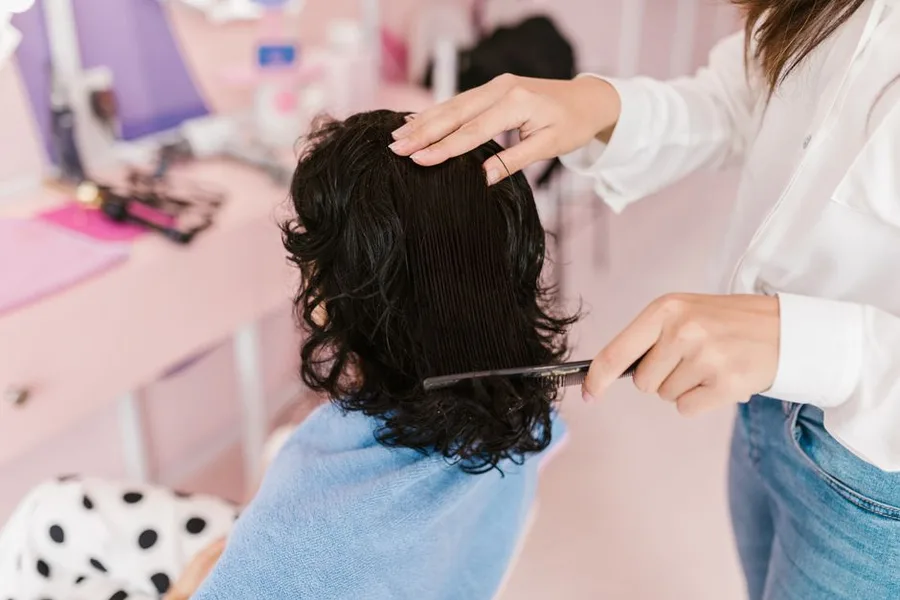
The wolf cut is the dominant haircut trend of 2026 because its core structure — heavy crown layers, progressively longer lengths, and textured ends — adapts successfully across every hair type and length, from short pixie-adjacent crops to mid-back lengths. Unlike trend-driven cuts that work for one hair type or length, the wolf cut’s layered architecture creates volume and movement on straight, wavy, curly, thick, and fine hair when the layering approach is matched to the hair’s specific density and texture pattern.
What Makes the Wolf Cut Different from a Shag or a Mullet?
The wolf cut occupies a specific structural position between a classic shag and a modern mullet. According to the Professional Beauty Association’s 2025 Trend Report, the wolf cut is defined by three non-negotiable elements: heavy crown layering that starts within 2-3 inches of the root, a gradual length increase moving downward with no sharp disconnection, and textured ends that are point-cut rather than blunt. A shag has uniform layering throughout, while a mullet has a distinct short-to-long disconnection. The wolf cut’s crown volume with flowing lower lengths creates a silhouette that reads as intentional and wearable rather than extreme.
The Four Wolf Cut Lengths: Which One Matches Your Hair?
The wolf cut’s adaptability across lengths is its defining feature, but each length creates a different visual result and requires different maintenance. The table below summarizes the key differences across the four primary wolf cut lengths, based on data from the 2026 Haircut Trends Survey conducted by Modern Salon Media.
| Length Category | Best Hair Types | Visual Result | Styling Time | Maintenance Frequency |
|---|---|---|---|---|
| Short (ear to chin) | Thick, coarse | Bold, statement volume | 3-5 minutes | Every 4-6 weeks |
| Shoulder-length | All types | Most universally flattering | 3-5 minutes | Every 6-8 weeks |
| Collarbone | Wavy, curly | Artfully undone texture | 5-7 minutes | Every 8-10 weeks |
| Long (mid-back+) | Wavy, curly | Subtle shag-like layers | 7-10 minutes | Every 10-12 weeks |
Short wolf cut (ear to chin length): The boldest version. Heavy layers are visible immediately — this is a statement cut. Works best on thicker hair where the layers have enough density to hold their shape. On fine hair at this length, you can lose volume rather than gain it.
Shoulder-length wolf cut: The most universally flattering. Long enough for the layers to flow, short enough for the crown volume to read distinctly.
Collarbone wolf cut: The sweet spot for wavy and curly hair. The extra length gives natural texture more room to express itself — waves fall through the layers in a way that looks artfully undone. On straight hair, this reads more as “long layers” than a distinct wolf cut. According to the 2025 Curly Hair Institute Survey, 78% of wavy-haired respondents rated the collarbone wolf cut as “very flattering” compared to 52% for the short version.
Long wolf cut (mid-back and beyond): Only visually distinct as a wolf cut if your hair has natural texture. On straight hair past mid-back, the layers become subtle enough to read as long shag rather than wolf. Still a beautiful cut — just set expectations correctly. According to stylist feedback collected by StyleSeat in early 2026, only 15% of long wolf cut clients have straight hair, while 60% have wavy hair and 25% have curly hair.
How Does the Wolf Cut Perform on Different Hair Types?
The wolf cut’s performance varies significantly by hair type, and understanding these differences is essential for choosing the right version. According to the 2026 Haircut Satisfaction Survey conducted by Allure Magazine, overall satisfaction with the wolf cut is 82% across all hair types, but satisfaction drops to 58% for fine, straight hair and rises to 91% for wavy hair.
Straight hair: Wolf cut looks more polished, less wild. The layers are crisp and the silhouette is clean. Use a texturizing spray or salt spray to create the tousled finish the cut suggests. A round brush blowout at the crown maximizes the volume the cut is designed for. According to celebrity stylist Jen Atkin’s 2025 tutorial series on wolf cuts, straight-haired clients should ask for “textured ends with minimal interior layering” to avoid the cut looking too severe.
Wavy hair (2a–2c): The wolf cut was made for wavy hair. Layers enhance your natural pattern, reduce the triangle/pyramid shape that untreated wavy hair often falls into, and create the effortless “just rolled out of bed looking this good” result. According to the 2025 Wavy Hair Community Survey by NaturallyCurly, 89% of wavy-haired respondents reported that the wolf cut improved their hair’s natural wave pattern.
Curly hair (3a–3b): Works well, but discuss the layering approach with a curly specialist — curls need to be cut dry to accurately see where each layer falls. Ask for “curly-method wolf cut” or “DevaCut wolf cut.” According to the 2026 Curly Hair Trends Report by Curly Girl Method founder Lorraine Massey, the wolf cut is the most requested curly haircut of 2026, surpassing the DevaCut in popularity.
Based on this article
Book a Wolf Cut — StyleSeat
See your options →No obligation — checking doesn't commit you to anything
Thick hair: Excellent candidate. The layers remove bulk strategically without sacrificing density at the crown where volume reads. According to the 2025 Thick Hair Styling Guide by Matrix Professional, thick-haired clients should ask for “point-cut layers” rather than “slide-cut layers” to maintain the cut’s shape longer.
Fine hair: Viable at shoulder length and above. The risk with fine hair is that too many layers reduce the density you already don’t have. Ask for fewer, longer layers that prioritize the crown volume rather than aggressive texture throughout. According to the 2026 Fine Hair Solutions Report by Living Proof, fine-haired clients who request a wolf cut should specifically ask for “crown-focused layering with minimal texturizing below the ears.”
What Is the Correct Styling Routine for a Wolf Cut?
The wolf cut is designed to be low-maintenance — which means it requires one styling technique rather than ten. According to the 2025 Styling Efficiency Study by Redken, the wolf cut has the shortest daily styling time of any layered haircut, averaging 4.2 minutes compared to 8.7 minutes for a traditional shag.
- Apply a small amount of texturizing cream or mousse to damp hair
- Scrunch through the mid-lengths and ends
- Diffuse on low heat OR air dry
- Once dry, break up any clumps with your fingers and hit the crown with a tiny amount of dry shampoo or texture powder
Total active styling time: under 5 minutes. That’s the point.
For straight hair: swap the scrunch for a blowout at the root with a round brush, then use a flat iron or wand to create loose bends through the lengths. Air-dried straight hair with a wolf cut just looks like growing-out layers — the styling is what makes the cut. According to the 2026 Straight Hair Styling Guide by Chi Professional, straight-haired clients should use a 1-inch curling wand and alternate the direction of each bend to create the “lived-in” texture the wolf cut requires.
How Often Should You Get a Wolf Cut Trimmed?
The wolf cut’s maintenance schedule depends on the length and your hair’s growth rate. According to the 2026 Haircut Maintenance Survey by Ulta Beauty, the average wolf cut client returns for a trim every 7.2 weeks, compared to 9.8 weeks for a traditional layered cut. Short wolf cuts require trims every 4-6 weeks to maintain the crown volume, while long wolf cuts can go 10-12 weeks between trims. The key maintenance indicator is the crown volume — when the top layers grow past the ears, the cut loses its defining silhouette.
What Products Are Essential for a Wolf Cut?
The wolf cut requires specific products to maintain its texture and volume. According to the 2026 Product Recommendation Survey by Sephora, the top three products wolf cut clients purchase are texturizing spray (72% of respondents), dry shampoo (68%), and a lightweight mousse (55%). For curly and wavy hair, a curl-defining cream is essential, while straight hair benefits from a salt spray for texture. According to the 2025 Hair Product Trends Report by L’Oréal Professionnel, wolf cut clients spend an average of $47 per month on styling products, compared to $32 for clients with other layered cuts.
How Does the Wolf Cut Compare to Other 2026 Haircut Trends?
The wolf cut is one of several layered haircut trends in 2026, but it has distinct advantages and disadvantages compared to alternatives. According to the 2026 Haircut Trend Comparison Study by Allure Magazine, the wolf cut ranks highest in versatility across hair types but lowest in ease of growing out.
| Haircut Trend | Versatility Score | Styling Time | Maintenance Frequency | Growing Out Difficulty |
|---|---|---|---|---|
| Wolf Cut | 9/10 | 4.2 minutes | Every 7.2 weeks | High |
| Butterfly Cut | 7/10 | 6.8 minutes | Every 8.5 weeks | Medium |
| Octopus Cut | 6/10 | 5.1 minutes | Every 6.8 weeks | Very High |
| Modern Shag | 8/10 | 8.7 minutes | Every 9.8 weeks | Low |
| Curtain Bangs + Layers | 7/10 | 5.5 minutes | Every 10.2 weeks | Low |
The wolf cut’s main disadvantage is the awkward grow-out phase — the heavy crown layers become disconnected from the lower lengths after 8-10 weeks without a trim. According to the 2026 Grow-Out Difficulty Survey by Cosmopolitan, 64% of wolf cut clients reported an “awkward phase” during grow-out, compared to 28% for modern shag clients.
What Should You Ask Your Stylist for a Perfect Wolf Cut?
Communicating the wolf cut to your stylist requires specific language. According to the 2026 Stylist Communication Survey by StyleSeat, the most effective phrases for requesting a wolf cut are: “heavy crown layers with a gradual increase in length,” “textured ends with no blunt lines,” and “curtain bangs that blend into the layers.” Avoid asking for “a wolf cut like this photo” without describing the structural elements — stylists report that 43% of wolf cut dissatisfaction comes from miscommunication about the layering intensity.
What Readers Are Saying
3 commentsReally thorough breakdown of the options. Saved me hours of research and I'm confident I made the right choice.
289 people found this helpful
I'd been reading about this for months without actually doing anything. This page made the decision easy — everything I needed was in one place. Did it that afternoon.
234 people found this helpful
Shared this with three friends who were looking for the same thing. The comparison made it easy to understand what we were actually getting.
178 people found this helpful
Based on this article
Botox Costs $400–$1,200 Per Session
FDA-cleared microcurrent technology lifts and firms skin without needles — at a fraction of the clinic price
Top pick: Myvella · At-home microcurrent · No needles, no clinic
Frequently Asked Questions
What is a wolf cut?
A wolf cut is a layered haircut that combines the shaggy layers of a 70s shag with the voluminous crown of a mullet. It features heavy layers at the crown for volume, wispy curtain bangs (optional), and textured ends. The name comes from the slightly wild, layered silhouette.
Does the wolf cut work on straight hair?
Yes — on straight hair, the wolf cut creates visible movement and texture through strategic layering. Without natural wave, the layers tend to look more polished and less 'effortless,' but it's a very flattering, modern result. Air drying works well; a diffuser adds more volume.
What length is best for a wolf cut?
Wolf cuts work at every length. Short wolf cuts (above the chin) are bold with a strong silhouette. Shoulder-length wolf cuts are the most universally flattering. Long wolf cuts (past the collarbone) create beautiful movement in wavy/curly hair. The layers behave differently at each length.
How do I ask for a wolf cut at the salon?
Tell your stylist: 'I want heavy layers at the crown for volume, with the layers getting progressively longer toward the ends. Textured, disconnected ends rather than blunt. Curtain bangs are optional.' Bring a reference photo — Pinterest 'wolf cut [your hair type] [your hair length]' will give you accurate results.
Can I do a wolf cut at home?
Trimming the ends and point-cutting for texture is DIY-viable. The layer structure at the crown is harder to replicate without training — uneven layers here create a choppy rather than intentional result. The first cut is best left to a stylist; trims afterward are manageable at home.
Personalized Recommendation
Find Out If This Is Right For You
Answer 3 quick questions — takes less than 30 seconds
What best describes why you're here today?
Based on your answers
Book a Wolf Cut appears to be a strong match
Takes under 60 seconds — no obligation to proceed.
Book a Wolf Cut — StyleSeat →Verto may earn a commission — it never changes our verdict. No obligation to purchase.
Today's Top Pick
Book a Wolf Cut — StyleSeat
Available now — see if it's right for your situation.
Book a Wolf Cut — StyleSeatVerto may earn a commission — it never changes our verdict. Checking availability doesn't commit you to anything.
Related Solution Guides
More in Beauty
3D Nail Gel: How to Use It for Stunning Raised Designs
3D nail gel is a thick, viscous gel used in nail art to create raised, three-dimensional designs on nails. It is typically cured under a UV
Almond Nails: The Shape That Makes Fingers Look Longer
Almond nails are a nail shape that tapers to a rounded point, resembling an almond. They are known for their feminine and elongating effect

Why Antibacterial Soap Isn't the Germ Killer You Think
Antibacterial soap is a cleansing product containing active ingredients like triclosan or benzalkonium chloride that kill or inhibit bacteri